Fervour of Borges
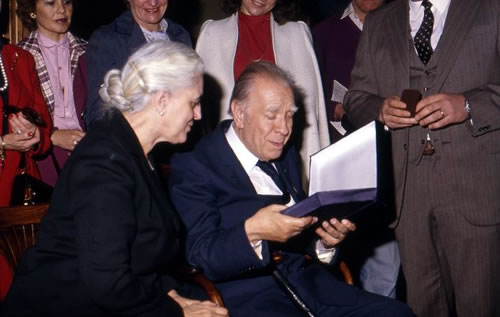
[In the upper photo Borges in his Mother's room which, after her death in 1975 aged 99 years, Borges kept intact until his own death in 1986.]
"Every secret of a writer's soul, every experience of his life, every quality of his mind is written large in his works"
Virginia Woolf
Turn on the player
to listen the favorite film of Borges Psycho's
prelude composed by Bernard
Herrmann and performed by Danny
Elfman.
Psycho musical score is followed by the poet Betina
Edelberg -a friend of Borges and co-author of his "Leopoldo Lugones" and of "The lost image" (a spoken ballet, satirical about dictatorships, namely the fascism of general Perón)- interviewed in August 2001 by the Argentina´s National Radio about Borges and his Mother (with whom
Borges lived all his life until she died at 99 years of age and Georgie was already a
76 years old "boy" a his Mother called him till the end). Thus "Georgie" lived all his life under the domineering power of his Mother as well as of his younger sister Norah (who was his only childhood playmate and made Georgie do things that made him afraid, as Borges himself reported during interviews). The domineering role the Mother and the younger Sister in the life of Borges was later substituted by masochists relationships to other females, as Borges himself tells in "The Aleph", such as his relationship with Mrs Elsa Astete or later his last assistant. The catholic fundamentalism of Borges' Mother was similar to that of Arthur Rimbaud mother who spit her son -at his dying hospital bed- "I prefer you dead than homosexual", a sentence similar to the final one that Borges' Mother spit in an attempt to modify the end of an autobiographic tale his blind son was dictating to her, "The intruder": "Let's go to work, brother"; although the Eros of the Poet prevails over the maternal censorship ("They embraced each other, almost in tears. Henceforth another secret united them for ever: the woman sadly sacrificed and the obligation of forgetting" [of course: together, very much like did king David and his lover Jonathan of the Biblical quote opening Borges´ intruder]. Also Verlaine, lover of Rimbaud, was the preferred French poet of Borges, who in addition wanted to die in the room in which Oscar Wilde lived during his homosexual exile in Paris in the Hôtel d´Alsace (today renamed "L' Hôtel").
'MOIS, BORGES' [1986] Paris
'Les images de la femme dans l'oeuvre Borges'
par Miguel-Ángel Meizoso
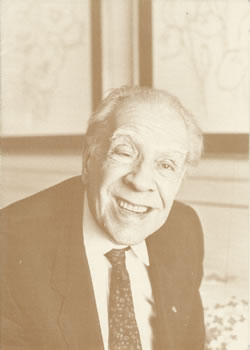
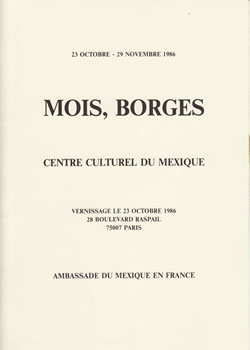
"La femme n´existe pas" Jacques Lacan
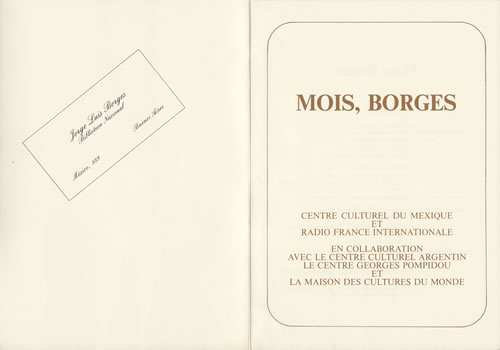
"La femme est un acte de foi" J L Borges
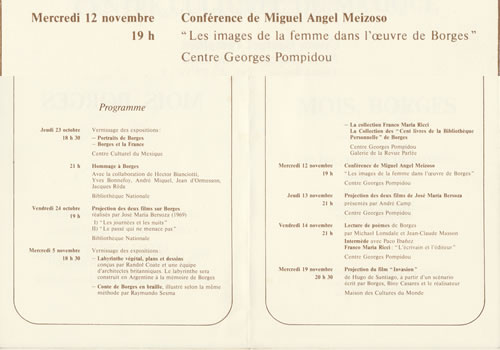
Lecture by Miguel Ángel Meizoso (the lecture was scheduled for Borges during three months of hommages to the Poet)
at The Centre George Pompidou and the ´Revue Parlée´
Wednesday 12 November 7pm
Confessions to understand the Eros of Borges:
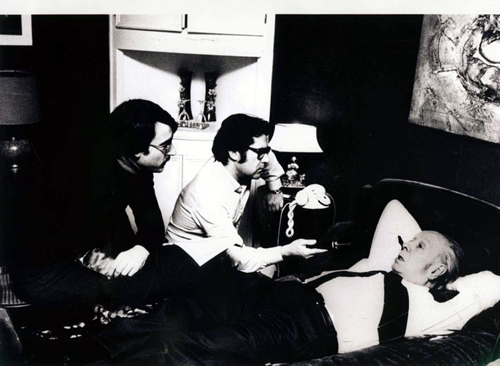
Ignacio Ramonet and Ramón Chao interviewing J L Borges on the bed of the room
where Oscar Wilde died in Paris (and where Borges wanted to die himself where
not that the false widow Kodama kept Borges isolated from his friends in Geneva -during 1986 before his forthcoming death due to pancreatic cancer- in order to get control of
his state).
Oscar Wilde died in that Hôtel d´Alsace, next to the Palais des Beaux
Arts (later renamed Hôtel des Beaux Arts) banished from the UK due to the Puritan
repression against homosexual desire, the same kind of sexual repression Borges suffered his entire life, first from his tyranic Mother until she died aged 99 when Georgie was 75 years old.
Resting on Oscar Wilde´s room in Paris, Borges was reciting to Ramonet and Chao
Walt Withman´s verses in praise of the penis and the fellatio between males
... something that for his hard heterosexual audience was an unwanted and unacceptable
confession.
In these few final interviews (1984-85) before his death, Borges denounced who brought
him (Miss Kodama) to the infamous meetings with neo Nazi dictators Pinochet
in Chile and Videla in Argentina (1976-83), lending the genocide dictators public support
while they were kidnapping and torturing to death thousands of citizens for opposing their
reign of terror.
Kodama does not want these interviews to be published as she did not want her
fake certificate of marriage to Borges to be published because she bought it
to the criminal personal ambassador in Geneva of dictator Stroessner from Paraguay.
Such is the power of mafias, institutional state corruption, lack of justice
and absolute impunity in those countries (Argentina, Paraguay, etc) that criminal
behaviors are praised instead of being punished.
"... (Mother) She has always been a companion to me -especially
in later years when I was blind- and an understanding and forgiven friend.
For years, until recently, she handled all my secretarial work, answering letters,
reading to me, taking down my dictation, and also travelling with me in many
occasions both at home and abroad. It was she, though I never gave a thought
to it at the time, who quietly and effectively fostered my literary career."
On Leonor Acevedo widow Borges,
fragment from An Autobiographical Essay by Jorge Luis Borges
(written near 1970 for The New Yorker with the assistance of Norman Thomas Di
Giovanni.)
Below:
Georgie & Adolfito(circa
1934)
an everyday lifelong "English" friendship

" ; and you so lazily and incessantly beautiful"'
Two English Poems' by J L Borges, 1934
"II Samuel 2, 26 : I am distressed for thee, my brother, Jonathan: very
pleasant hast thou been unto me: to know thy love was to me most wonderful,
passing the love of women."
'The intruder' by Jorge Luis Borges
"At times he (Shakespeare = the other, the self) would leave a confession
hidden away in some corner of his work, certain that it would not be deciphered"'
'Everything and Nothing' by Jorge Luis Borges
"Hay un Borges
personal y un Borges público, personaje que me desagrada mucho, quien
suele contestar a reportajes y aparecer en el cinematógrafo y en la televisión.
Yo soy el Borges íntimo, es decir: creo que no he cambiado desde
que era niño, salvo que cuando era niño no sabía
expresarme"
J L Borges
Borges entrevistado por Neustandt:... "agregó en voz baja: si llego a decir que quisiera ver a un hombre ¿sabe lo que dirían de mí...?".
Books & articles to read:
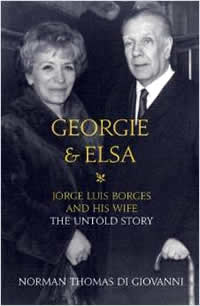 'Georgie
& Elsa' The Untold Story of Jorge Luis Borges and His Wife'
'Georgie
& Elsa' The Untold Story of Jorge Luis Borges and His Wife'
by Norman
Thomas Di Giovanni
“A biography of Borges, by his translator.
Jorge Luis Borges, known as Georgie to his friends, married Elsa Astete Millán in 1967. Borges was sixty-eight years old at the time of the wedding; Elsa, a widow, with a son in his twenties, was eleven years younger.
It proved to be a tempestuous and eventful marriage that would leave an indelible mark on the remainder of Borges’ life, but their relationship has been largely glossed over by previous biographers. This is because the one person who knew all the details has refused to speak about it. Until now.
Norman Thomas di Giovanni worked with Borges in Cambridge, Massachusetts, and in Buenos Aires from late 1967 to 1972 and thereafter sporadically until Borges’s death in 1986. During their first period together di Giovanni spent more time with the couple than did almost anyone else. He was privy to the private side of their relationship and to its sudden decline. It was di Giovanni who helped the demoralized Borges by organizing and arranging his divorce and at the same time rescuing his library and smuggling him out of Buenos Aires to avoid the wrath of Elsa and her lawyers.
The book is based on the author’s extensive collection of original material in the form of diaries, notebooks, letters, manuscripts, and photographs, most of which has never before been seen. It provides a unique insight into one of the few true geniuses of literature..."
Borges did not have sexual relation with any woman and was terrified by Elsa's tyranny... Borges beg his beloved young master Adolfito Bioy Casares, and their friend the philosopher and film maker Hugo Santiago, and his friend and translator Prof. Di Giovanni to free him from the sadic tyranny of Elsa Astete.
The roman familiar of the neurotic repeating its unconscious pattern -the Mother of Georgie was authoritarian, very domineering on her unique boy making of him the easy target of similar sadistic females (as indicated in autobiographic stories of the author) -, a decade later Borges would have to beg for help to free himself from the false widow Kodama... but none of his old friends around to help
Read more:
Jorge Luis Borges and his ‘bitch’ ... [The Spectator]
‘Georgie & Elsa: Jorge Luis Borges and His Wife, the Untold Story’ review in The Washington Post
Mr and Mrs Borges ...[The Times Literary Supplement]
'Borges on the Couch' [of Procuste]
by David Foster Wallace
David Foster Wallace ravages Williamson's sychophantic "biography" "Borges: a life" [not his but a work to instigate a culte of his false widow Miss Kodama]:
There's an unhappy paradox about literary biographies. The majority of readers who will be interested in a writer's bio, especially one as long and exhaustive as Edwin Williamson's ''Borges: A Life,'' will be admirers of the writer's work. They will therefore usually be idealizers of that writer and perpetrators (consciously or not) of the intentional fallacy. Part of the appeal of the writer's work for these fans will be the distinctive stamp of that writer's personality, predilections, style, particular tics and obsessions -- the sense that these stories were written by this author and could have been done by no other.* And yet it often seems that the person we encounter in the literary biography could not possibly have written the works we admire. And the more intimate and thorough the bio, the stronger this feeling usually is. In the present case, the Jorge Luis Borges who emerges in Williamson's book -- a vain, timid, pompous mama's boy, given for much of his life to dithery romantic obsessions -- is about as different as one can get from the limpid, witty, pansophical, profoundly adult writer we know from his stories. Rightly or no, anyone who reveres Borges as one of the best and most important fiction writers of the last century will resist this dissonance, and will look, as a way to explain and mitigate it, for obvious defects in Williamson's life study. The book won't disappoint them.
Edwin Williamson is an Oxford don and esteemed Hispanist whose ''Penguin History of Latin America'' is a small masterpiece of lucidity and triage. It is therefore unsurprising that his ''Borges'' starts strong, with a fascinating sketch of Argentine history and the Borges family's place within it. For Williamson, the great conflict in the Argentine national character is that between the ''sword'' of civilizing European liberalism and the ''dagger'' of romantic gaucho individualism, and he argues that Borges's life and work can be properly understood only in reference to this conflict, particularly as it plays out in his childhood. In the 19th century, grandfathers on both sides of his family distinguished themselves in important battles for South American independence from Spain and the establishment of a centralized Argentine government, and Borges's mother was obsessed with the family's historical glory. Borges's father, a man stunted by the heroic paternal shadow in which he lived, evidently did things like give his son an actual dagger to use on bullies at school, and later sent him to a brothel for devirgination. The young Borges failed both these ''tests,'' the scars of which marked him forever and show up all over the place in his fiction, Williamson thinks.
It is in these claims about personal stuff encoded in the writer's art that the book's real defect lies. In fairness, it's just a pronounced case of a syndrome that seems common to literary biographies, so common that it might point to a design flaw in the whole enterprise. The big problem with ''Borges: A Life'' is that Williamson is an atrocious reader of Borges's work; his interpretations amount to a simplistic, dishonest kind of psychological criticism. You can see why this problem might be intrinsic to the genre. A biographer wants his story to be not only interesting but literarily valuable.** In order to ensure this, the bio has to make the writer's personal life and psychic travails seem vital to his work. The idea is that we can't correctly interpret a piece of verbal art unless we know the personal and/or psychological circumstances surrounding its creation. That this is simply assumed as an axiom by many biographers is one problem; another is that the approach works a lot better on some writers than on others. It works well on Kafka -- Borges's only modern equal as an allegorist, with whom he's often compared -- because Kafka's fictions are expressionist, projective, and personal; they make artistic sense only as manifestations of Kafka's psyche. But Borges's stories are very different. They are designed primarily as metaphysical arguments†; they are dense, self-enclosed, with their own deviant logics. Above all, they are meant to be impersonal, to transcend individual consciousness -- ''to be incorporated,'' as Borges puts it, ''like the fables of Theseus or Ahasuerus, into the general memory of the species and even transcend the fame of their creator or the extinction of the language in which they were written.'' One reason for this is that Borges is a mystic, or at least a sort of radical Neoplatonist -- human thought, behavior and history are all the product of one big Mind, or are elements of an immense cabalistic Book that includes its own decoding. Biography-wise, then, we have a strange situation in which Borges's individual personality and circumstances matter only insofar as they lead him to create artworks in which such personal facts are held to be unreal.
''Borges: A Life,'' which is strongest in its treatments of Argentine history and politics,†† is at its very worst when Williamson is discussing specific pieces in light of Borges's personal life. Unfortunately, he discusses just about everything Borges ever wrote. Williamson's critical thesis is clear: ''Bereft of a key to their autobiographical context, no one could have grasped the vivid significance these pieces actually had for their author.'' And in case after case, the resultant readings are shallow, forced and distorted -- as indeed they must be if the biographer's project is to be justified. Random example: ''The Wait,'' a marvelous short-short that appears in the 1949 story collection ''The Aleph,'' takes the form of a layered homage to Hemingway, gangster movies and the Buenos Aires underworld. An Argentine mobster, in hiding from another mobster and living under the pursuer's name, dreams so often of his killers' appearance in his bedroom that, when the assassins finally come for him, he ''gestured at them to wait, and he turned over and faced the wall, as though going back to sleep. Did he do that to awaken the pity of the men that killed him, or because it's easier to endure a terrifying event than to imagine it, wait for it endlessly -- or (and this is perhaps the most likely possibility) so that his murderers would become a dream, as they had already been so many times, in that same place, at that same hour?''
The distant interrogative ending -- a Borges trademark -- becomes an inquisition into dreams, reality, guilt, augury and mortal terror. For Williamson, though, the real key to the story's significance appears to be that ''Borges had failed to win the love of Estela Canto. . . . With Estela gone, there seemed nothing to live for,'' and he represents the story's ending all and only as a depressed whimper: ''When his killers finally track him down, he just rolls over meekly to face the wall and resigns himself to the inevitable.''
It is not merely that Williamson reads every last thing in Borges's oeuvre as a correlative of the author's emotional state. It is that he tends to reduce all of Borges's psychic conflicts and personal problems to the pursuit of women. Williamson's theory here involves two big elements: Borges's inability to stand up to his domineering mother,‡ and his belief, codified in a starry-eyed reading of Dante, that ''it was the love of a woman that alone could deliver him from the hellish unreality he shared with his father and inspire him to write a masterpiece that would justify his life.'' Story after story is thus interpreted by Williamson as a coded dispatch on Borges's amorous career, which career turns out to be sad, timorous, puerile, moony and (like most people's) extremely boring. The formula is applied equally to famous pieces, such as '' 'The Aleph' (1945), whose autobiographical subtext alludes to his thwarted love for Norah Lange,'' and to lesser-known stories like ''The Zahir'':
''The torments described by Borges in this story . . . are, of course, displaced confessions of the extremity of his plight. Estela [Canto, who'd just broken up with him] was to have been the 'new Beatrice,' inspiring him to create a work that would be 'the Rose without purpose, the Platonic, intemporal Rose,' but here he was again, sunk in the unreality of the labyrinthine self, with no prospect now of contemplating the mystic Rose of love.''
Thin though this kind of explication is, it's preferable to the reverse process by which Williamson sometimes presents Borges's stories and poems as ''evidence'' that he was in emotional extremities. Williamson's claim, for instance, that in 1934, ''after his definitive rejection by Norah Lange, Borges . . . came to the brink of killing himself'' is based entirely on two tiny pieces of contemporaneous fiction in which the protagonists struggle with suicide. Not only is this a bizarre way to read and reason -- was the Flaubert who wrote ''Madame Bovary'' eo ipso suicidal? -- but Williamson seems to believe that it licenses him to make all sorts of dubious, humiliating claims about Borges's interior life: ''A poem called 'The Cyclical Night' . . . which he published in La Nacion on October 6, reveals him to be in the throes of a personal crisis''; ''In the extracts from this unfinished poem . . . we can see that the reason for wishing to commit suicide was literary failure, stemming ultimately from sexual self-doubt.'' Bluck.
Again, it is primarily because of Borges's short stories that anyone will care enough to read about his life. And while Williamson spends a lot of time detailing the explosive success that Borges enjoyed in middle age, after the 1961 International Publishers' Prize (shared with Samuel Beckett) introduced his work to audiences in the United States and Europe,‡‡ there is little in his book about just why Jorge Luis Borges (1899-1986) is an important enough fiction writer to deserve such a microscopic bio. The truth, briefly stated, is that Borges is arguably the great bridge between modernism and post-modernism in world literature. He is modernist in that his fiction shows a first-rate human mind stripped of all foundations in religious or ideological certainty -- a mind turned thus wholly in on itself.‡‡‡ His stories are inbent and hermetic, with the oblique terror of a game whose rules are unknown and its stakes everything.
And the mind of those stories is nearly always a mind that lives in and through books. This is because Borges the writer is, fundamentally, a reader. The dense, obscure allusiveness of his fiction is not a tic, or even really a style; and it is no accident that his best stories are often fake essays, or reviews of fictitious books, or have texts at their plots' centers, or have as protagonists Homer or Dante or Averroes. Whether for seminal artistic reasons or neurotic personal ones or both, Borges collapses reader and writer into a new kind of aesthetic agent, one who makes stories out of stories, one for whom reading is essentially -- consciously -- a creative act. This is not, however, because Borges is a metafictionist or a cleverly disguised critic. It is because he knows that there's finally no difference -- that murderer and victim, detective and fugitive, performer and audience are the same. Obviously, this has postmodern implications (hence the pontine claim above), but Borges's is really a mystical insight, and a profound one. It's also frightening, since the line between monism and solipsism is thin and porous, more to do with spirit than with mind per se. And, as an artistic program, this kind of collapse/transcendence of individual identity is also paradoxical, requiring a grotesque self-obsession combined with an almost total effacement of self and personality. Tics and obsessions aside, what makes a Borges story Borgesian is the odd, ineluctable sense you get that no one and everyone did it. This is why, for instance, it is so irksome to see Williamson describe ''The Immortal'' and ''The Writing of the God'' -- two of the greatest, most scalp-crinkling mystical stories ever, next to which the epiphanies of Joyce or redemptions of O'Connor seem pallid and crude -- as respective products of Borges's ''many-layered distress'' and ''indifference to his fate'' after various idealized girlfriends dump him. Stuff like this misses the whole point. Even if Williamson's claims are true, the stories so completely transcend their motive cause that the biographical facts become, in the deepest and most literal way, irrelevant.
*Of course, Borges's famous ''Pierre Menard, Author of the 'Quixote' '' makes sport of this very conviction, just as his later ''Borges and I'' anticipates and refutes the whole idea of a literary biography. The fact that his fiction is always several steps ahead of its interpreters is one of the things that make Borges so great, and so modern.
**Actually, these two agendas dovetail, since the only reason anybody's interested in a writer's life is because of his literary importance. (Think about it -- the personal lives of most people who spend 14 hours a day sitting there alone, reading and writing, are not going to be thrill rides to hear about.)
†This is part of what gives Borges's stories their mythic, precognitive quality (all cultures' earliest, most vital metaphysics is mythopoetic), which quality in turn helps explain how they can be at once so abstract and so moving.
††The biography is probably most valuable in its account of Borges's political evolution. A common bit of literary gossip about Borges is that the reason he wasn't awarded a Nobel Prize was his supposed support for Argentina's ghastly authoritarian juntas of the 1960's and 70's. From Williamson, though, we learn that Borges's politics were actually far more complex and tragic. The child of an old liberal family, and an unabashed leftist in his youth, Borges was one of the first and bravest public opponents of European fascism and the rightist nationalism it spawned in Argentina. What changed him was Peron, whose creepy right-wing populist dictatorship aroused such loathing in Borges that he allied himself with the repressively anti-Peron Revolucion Libertadora. Borges's situation following Peron's first ouster in 1955 is full of unsettling parallels for American readers. Because Peronism still had great popularity with Argentina's working poor, the exiled dictator retained enormous political power, and would have won any democratic national election held in the 1950's. This placed believers in liberal democracy (such as J. L. Borges) in the same sort of bind that the United States faced in South Vietnam a few years later -- how do you promote democracy when you know that a majority of people will, if given the chance, vote for an end to democratic voting? In essence, Borges decided that the Argentine masses had been so hoodwinked by Peron and his wife that a return to democracy was possible only after the nation had been cleansed of Peronism. Williamson's analysis of the slippery slope this decision put Borges on, and his account of the hatchet job that Argentina's leftists did on Borges's political reputation in retaliation for his defection (such that by 1967, when the writer came to Harvard to lecture, the students practically expected him to have epaulettes and a riding crop), make for his book's best chapters.
‡ Be warned that much of the mom-based psychologizing seems right out of ''Oprah'': e.g., ''However, by urging her son to realize the ambitions she had defined for herself, she unwittingly induced a sense of unworthiness in him that became the chief obstacle to his self-assertion.''
‡‡Williamson's chapters on Borges's sudden world fame will be of special interest to those American readers who weren't yet alive or reading in the mid-1960's. I was lucky enough to discover Borges as a child, but only because I happened to find ''Labyrinths,'' an early English-language collection of his most famous stories, on my father's bookshelves in 1974. I believed that the book was there only because of my parents' unusually fine taste and discernment -- which verily they do possess -- but what I didn't know was that by 1974 ''Labyrinths'' was also on tens of thousands of other homes' shelves in this country, that Borges had actually been a sensation on the order of Tolkien and Gibran among hip readers of the previous decade.
‡‡‡ Labyrinths, mirrors, dreams, doubles -- so many of the elements that appear over and over in Borges's fiction are symbols of the psyche turned inward.
DAVID FOSTER WALLACE’S most recent books are ‘‘Everything and More: A Compact History of Infinity’’ and ‘‘Oblivion: Stories’’
...published by The New York Times
"Borges, images, dialogues et souvenirs"
por María Esther Vázquez
 "Sube
Borges a su casa, un departamento en un sexto piso [Maipú 994, Buenos
Aires],
donde vive desde los años cuarenta [1940] con su madre,
casi centenaria [1975];
Leonor Acevedo [viuda de Borges]...El living, donde Borges recibe a todo
el mundo, es amplio. En un extremo esta la mesa del comedor; en el otro,
cerca de la ventana, hay un sofá y unos sillones. ...y cuatro
bibliotecas completan los muebles del cuarto. Detrás del vidrio de una de
ellas vive, fuera del tiempo, el bello rostro adolescente de Adolfo Bioy
Casares [tenía 17 años cuando cuando comenzaron una amistad única
con Borges que duró hasta el final de sus días]".
"Sube
Borges a su casa, un departamento en un sexto piso [Maipú 994, Buenos
Aires],
donde vive desde los años cuarenta [1940] con su madre,
casi centenaria [1975];
Leonor Acevedo [viuda de Borges]...El living, donde Borges recibe a todo
el mundo, es amplio. En un extremo esta la mesa del comedor; en el otro,
cerca de la ventana, hay un sofá y unos sillones. ...y cuatro
bibliotecas completan los muebles del cuarto. Detrás del vidrio de una de
ellas vive, fuera del tiempo, el bello rostro adolescente de Adolfo Bioy
Casares [tenía 17 años cuando cuando comenzaron una amistad única
con Borges que duró hasta el final de sus días]".
María Esther Vázquez en "Borges, sus días y su tiempo"
"Una charla con Borges" [1984]
y el Dr Luis Alberto Melograno
Lecuna: ¿Y cuál sería Borges, su reflexión con respecto a nuestra patria?
Borges: Yo no tengo ninguna solución que ofrecer, yo no tengo ninguna
esperanza, las cosas van de mal en peor...
Lecuna: Ahora, dentro de todo ese escepticismo con que todo el mundo vive... ¿no hay una luz?
Borges: Casi todos mis amigos están en la Recoleta. Yo soy un sobreviviente. Estoy ciego y solo. La gente que viene aquí, viene dispuesta a que yo les dicte algo, a que yo les pida que me lean algo en voz alta. Llevo una vida bastante sola. ¿Qué solución puedo ofrecer? Quizás, que para no padecer la historia, hay que hacerla... No sé. Soy un hombre grande, me canso fácilmente. No tengo soluciones. ¿Qué me puede esperar? Ya cumplo ochenta y tres años. Pero me gusta seguir viajando, si me invitan a algún país voy.
...pulse sobre el sobre el título para leer la conversación completa.
"Borges"
por Adolfo Bioy Casares
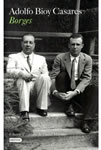 La falsa
viuda Borges criticó el libro con confidencias del autor a su entrañable compañero
de toda la vida, Adolfo
Bioy Casares, porque el volumen revela que el autor de El Aleph temía causarle
enojos y se quejaba del carácter "extraño" de la señorita que hoy posee los
derechos exclusivos de la millonaria explotación comercial de su obra:
...La afirmación aparece en el libro Borges (Destino), recientemente publicado
por el albacea literario de Bioy Casares, Daniel Martino, que recoge los diarios
de Bioy sobre su relación con Borges y ofrece la crónica de una amistad legendaria
que ambos escritores cultivaron durante décadas... En el libro "Borges",
Bioy Casares -fallecido en 1999- relata su larga amistad con Borges y apunta
que su viuda "es una mujer de idiosincrasia extraña. Acusaba a Borges por cualquier
motivo, lo castigaba con silencios; lo celaba (se ponía furiosa ante la devoción
de los admiradores). Junto a ella vivía temiendo enojarla"... más en diarios
La
Nación
La falsa
viuda Borges criticó el libro con confidencias del autor a su entrañable compañero
de toda la vida, Adolfo
Bioy Casares, porque el volumen revela que el autor de El Aleph temía causarle
enojos y se quejaba del carácter "extraño" de la señorita que hoy posee los
derechos exclusivos de la millonaria explotación comercial de su obra:
...La afirmación aparece en el libro Borges (Destino), recientemente publicado
por el albacea literario de Bioy Casares, Daniel Martino, que recoge los diarios
de Bioy sobre su relación con Borges y ofrece la crónica de una amistad legendaria
que ambos escritores cultivaron durante décadas... En el libro "Borges",
Bioy Casares -fallecido en 1999- relata su larga amistad con Borges y apunta
que su viuda "es una mujer de idiosincrasia extraña. Acusaba a Borges por cualquier
motivo, lo castigaba con silencios; lo celaba (se ponía furiosa ante la devoción
de los admiradores). Junto a ella vivía temiendo enojarla"... más en diarios
La
Nación
Pulse sobre la pantalla para ver y escuchar Adolfo Bioy Casares entrevistado por Bernardo
Neudstadt.
"Crónicas
Malditas"
por la periodista Olga
Wornat
 Editorial Grijalbo 2005 [es importante comprar la edición
completa, que también trae un reportaje sobre Adolfo Bioy Casares, porque
la abreviada no tiene todos los reportajes de investigación]:
Editorial Grijalbo 2005 [es importante comprar la edición
completa, que también trae un reportaje sobre Adolfo Bioy Casares, porque
la abreviada no tiene todos los reportajes de investigación]:
"Afuera llueve torrencialmente y adentro Epifanía Ubeda de Robledo, la
mujer que compartió cuarenta años con Jorge Luis Borges, juguetea con la punta
de su delantal de cocina. Tiene la mirada dulce y el cabello encanecido, recogido
en la nuca. Ya no hay plantas que la esperen y tampoco departamento. De la casa
del escritor, Fanny -como la conocen todos y como la llamaba su patrón- fue
expulsada violentamente por indicación de María Kodama, la viuda*. ...lo conoció
tanto como su madre y muchísimo más que María Kodama, la mujer que lo arrastró
muy enfermo a Suiza, lo separó de sus amigos, se casó con él y se quedó con
todos sus bienes. La misma que luego de morir Borges regresó a Argentina y en
el invierno de 1986 echó a Fanny del departamento y la dejó en la calle, sin
nada. Todo lo contrario a lo que había dispuesto Borges en un testamento que
Kodama hizo desaparecer." ...fragmento
del capítulo "La mucama de Borges" que puede leer en El
Gatopardo pulsándo aquí [*viuda putativa, para más información
leer el libro de investigación "La posesión póstuma de Borges",
de Juan Gasparini]
With
Borges
by Alberto
Manguel

 Or how to learn to see from a blind master. In 1964 the adolescent
Alberto Manguel was working during his school holidays at a bookshop. One day
a customer invited him to come to his house, after his job, to read for him.
That customer was Jorge Luis Borges ... the rest you may want to know is inside
this well written book.
Or how to learn to see from a blind master. In 1964 the adolescent
Alberto Manguel was working during his school holidays at a bookshop. One day
a customer invited him to come to his house, after his job, to read for him.
That customer was Jorge Luis Borges ... the rest you may want to know is inside
this well written book.
To know more also read the article on The
Times and the interview by Robert Birnbaum in The
Morning News
The world, by Jorge [Luis Borges]
Borges is famous as one of the key storytellers of our century, but above all he was the intellectual poet par excellence. But best read him in the original Spanish (or the available translations by Norman Thomas Di Giovanni]; be aware that translations of his Works in English are very bad since Borges death the 14th June 1986.
The last time I [Alberto Manguel] saw him [Borges] was in Paris, in the small hotel on the Rue des Beaux Arts that now carries plaques with the names of its two most celebrated guests: Oscar Wilde and Jorge Luis Borges. He was enjoying a period of travel to places he had always wanted to visit and now talked about them incessantly: to Egypt, where he had pocketed a handful of sand; to Iceland where, in a ruined church, he had recited 'Our Father' in Anglo-Saxon; to Japan, where he had discussed Buddhism with a Shinto priest. He was once again writing short stories in the fantastic vein that he had made his own in Ficciones and The Aleph.
Over dinner he told me the plot of the last fiction he was to write, 'Shakespeare's Memory', about a man who inherits the maze of Shakespeare's thoughts and recollections. It was never fully revised and should perhaps not have been published. In a brief poem written in the Fifties, he had observed that time doesn't like to reveal its endings: we don't know whose hand we've shaken for the last time, or what door we have closed for all eternity. I didn't know that after that dinner we would never meet again. Borges died in Geneva on 14 June 1986.
Vladimir Nabokov said that on first reading Borges he thought he had come upon a new and marvellous portico, but that behind the facade he found nothing. Poor Nabokov! What he took to be nothing is, in fact, everything or the possibility of everything: every story, every reflection, every thought and every event are all contained in what Borges called, in one of his best stories, the Library of Babel, the recipient of every book, past, present and future. What Borges offered his readers was a philosophy, an ethical system, a method (but these words are too mechanical) for the art of reading that is to say, for the craft of following a revelatory thread through the labyrinth of the universe.
Borges's own readings were uniquely illuminating and original. They shone light on unexpected corners of the text, and his comments were original not because he was the first to make them, but because he was the first to remind us that such perceptions existed. Listening to him read (or rather, since he was as blind as Homer, listening to him comment on the texts that were read to him out loud by readers such as myself) was always a revelation. He insisted that his readings were rediscoveries, and quoted Bacon quoting Plato (unwittingly) quoting King Solomon to prove it: 'So that as Plato had an imagination, that all knowledge was but remembrance; so Solomon giveth his sentence, that all novelty is but oblivion.'
His acute observations colour the readings of even those who haven't read him, because they now form part of the way so many writers think and write, writers as diverse as Marguerite Yourcenar and Umberto Eco, Italo Calvino and George Steiner, Salman Rushdie and Northrop Frye. His clear intelligence led him to define the essential ambiguity at the heart of every work of art, thereby granting readers permission to enjoy and yet not fully understand: 'The imminence of a revelation that does not take place,' he wrote, 'is, perhaps, the aesthetic fact.'
He observed that every writer creates his own precursors, thereby explaining the linked libraries that a soul-piercing book creates in the reader's memory. He told readers that they were, as much as himself, literary creators. He accepted the common feeling of bewildering unreality that at times pervades every reader and yet admitted the overwhelming knowledge that, despite it, our lives are horribly real ('Time is a tiger that devours me, but I am that tiger,' he admitted in 'A New Refutation of Time'. 'Time is a fire that consumes me, but I am that fire. The world, alas, is real and I, alas, am Borges').
He was a modest, profoundly ethical man who wished he could be braver and stronger, a man of action. He had no desire to be famous. He said that he longed for nothing but oblivion. He described in a short and extraordinary parable how Shakespeare, tired of being so many men, hoped to be nothing but one man, and how God, Shakespeare's Dreamer, mirrored his dream's despair in his own cosmic resignation. That mirroring was, for Borges, who hated mirrors, consolation of a kind. Above all, he believed, hope against hope, that it was our moral duty to be happy.
Since the first American translations of Borges, attempted in the Fifties by well-intentioned admirers such as Donald Yates and James Irby, English-speaking readers have been very poorly served. From the uneven versions collected in Labyrinths to the more meticulous, but ultimately unsuccessful, editions published by Norman Thomas di Giovanni, from Ruth Simm's abominable apery of 'Other Inquisitions' to Paul Bowles's illiterate rendition of 'The Circular Ruins', Borges in English must be read in spite of the translations. That one of the key writers of the century should lack an outstanding translator is indicative of how low 'foreign' literature lies in the estimation of English-language publishers. English-language readers have either to resign themselves to the old, barely serviceable translations, or submit to the new, barely serviceable translations by Andrew Hurley, Professor of English at the University of Puerto Rico.
Hurley has no ear for the rhythms of Borges's language. 'Funes el memorioso' is for Hurley 'Funes, His Memory' which is both inaccurate and ugly. 'Hombre de la Esquina Rosada' becomes 'Man on Pink Corner', in inexplicable pidgin English. 'The Circular Ruins', whose perfect prose can be recited like a poem, begins felicitously in Hurley's rendition with 'No one saw him slip from the boat in the unanimous night' and then sinks ignominiously with 'no one saw the bamboo canoe' and its inappropriate rhyme. A number of stories have been decently translated and are as readable as the best among the earlier versions, but mere readability is not good enough.
On what was to be our last night in Paris, Borges told me that, a few days earlier, he had attended a staging of Macbeth and that, in spite of the terrible performance, he had left the theatre 'shattered by tragic passion'. 'How curious,' he said, 'that Shakespeare's genius can even overcome the efforts of a bad actor.' Borges's genius will overcome Hurley's version, as it has so many others, and English-speaking readers, while waiting for the inspired translator of Borges, may have to resign themselves to the not impossible task of learning Spanish.
...by Alberto Manguel in The Guardian
The lesson of the Master: on Borges and his Work
by Norman
Thomas di Giovanni
 published by Continuum
Books where you can buy this book now or buy it at Foyles
.
published by Continuum
Books where you can buy this book now or buy it at Foyles
.
Di Giovanni, translator and writer, is also the author of the novel Novecento
on which Bernardo
Bertolucci's famous film about the rise of fascism, leading to the II World
War, is based.
Visit the website of author and translator Norman Thomas di Giovanni where you can purchase copies of his books.
In Orbis Tertius you can listen Bertolucci's interview on BBC - Radio 3, speaking on Freud and Borges.
"Genius
: A Mosaic of 100 Exemplary Creative Minds"
by Harold
Bloom
 "From De
Quincey, Borges had learned that Oedipus
himself, and not the man in general, was the profound solution to the riddle.
Blind
Oedipus, Homer,
Joyce,
Milton,
Borges: they form a five-in-one. Borges's mother died at ninety-nine, after
many devoted years as her son's secretary. Urbane, ironic, beautifully mannered,
Borges loses his composure only when Freud
is mentioned to him. Let us honor Borges by attaching to him Oedipus the man
rather than the complex. The genius of Borges, particularly his nonfictions,
is to exemplify what is man: the subject and object of his own quest."
"From De
Quincey, Borges had learned that Oedipus
himself, and not the man in general, was the profound solution to the riddle.
Blind
Oedipus, Homer,
Joyce,
Milton,
Borges: they form a five-in-one. Borges's mother died at ninety-nine, after
many devoted years as her son's secretary. Urbane, ironic, beautifully mannered,
Borges loses his composure only when Freud
is mentioned to him. Let us honor Borges by attaching to him Oedipus the man
rather than the complex. The genius of Borges, particularly his nonfictions,
is to exemplify what is man: the subject and object of his own quest."
J L Borges, la vie commence
par Jean Pierre Bernès
 Éditions de Cherche Midi, Paris
Jean-Pierre Bernés rencontra Jorge Luis Borges lorsqu’il fut nommé attaché culturel à l’ambassade de France à Buenos Aires. Il est l’éditeur des deux tomes des oeuvres complètes de l’écrivain argentin dans la Pléiade.
«On ne sait rien de l’intimité de Dante, de Cervantes ou de Shakespeare ; moi je veux qu’on sache, il faudra dire !» me déclara Borges, à plusieurs reprises, à l’aube de sa mort. « Le vieil anarchiste paisible qui s’éteignait doucement dans la chuchotante Genève » - c’est son ultime autoportrait - me donna même un jour un léger coup sur le bras pour s’assurer que j’avais bien entendu ses propos et, avec une voix d’outre-tombe presque enfantine, il ajouta : «Mon silence vous dira le reste.»
Un rire enjoué, semblable à des trilles musicales, ponctua volontairement son discours inachevé, mais impératif, comme un point d’orgue à la fin d’une partition.
Les «Œuvres complètes» de Borges, parues une première fois en 1993 et 1999, mais épuisées depuis, sont enfin rééditées dans la Pléiade. Gallimard avait laissé ce monument en déshérence sous la menace de Mlle Kodama, la fause veuve en colère qu'une décision de justice empêche de porter le nom de l'écrivain, épousé quelques mois avant sa mort, en 1986. Mais il semble que cette dame procédurière permettra cette fois à Jorge Luis Borges de reposer dans son cercueil en cuir pleine peau.
« Cette femme a gâché ma vie», confie aujourd'hui Jean Pierre Bernés, cible préférée de sa manie judiciaire, qui a découvert que même les procès gagnés se paient cher. C'est lui qui avait préparé, avec le concours d'un Borges aveugle et exilé à Genève, sa canonisation sur papier bible ; lui qui avait recueilli ses murmures de vieillard, lorsqu'il lui demandait de l'emmener à Paris « mourir en littérature ». Alors que quelques suppressions mineures dans les « Œuvres complètes », obtenues par l'entremise de l'hispaniste Jean Canavaggio, ont poussé Mlle Kodama à accepter leur réédition, il publie «J. L. Borges, La vie commence», un livre sur ces souvenirs qui le lient à Borges.
Lire aussi: "Mon ami Borges"
Un Borges desconocido, en la memoria de uno de sus editores.
"La posesión póstuma de Borges"
libro de investigación de Juan Gasparini
 ...La unión de Borges con María Kodama fue matriculada el 26 de abril de 1986 (1) en el caserio de Colonia Teniente Rojas Silva, en Paraguay, mientras cada uno de ellos permanecía en habitaciones separadas del Hotel l'Arbalète de Ginebra. Kodama era soltera. Borges se encontraba bordeando la agonía e imposibilitado de casarse nuevamente según la legislación argentina (2) de la época, habiendo obtenido la separación de Elsa Helena Astete en 1971, no autorizandolo a segundas nupcias.
Escrutando el asentamiento del matrimonio en el Archivo Central del Estado civil en Asunción, se le adjudican a Borges 87 años, cuando tenía 86. Quedó vacio el espacio reservado a su estado civil, probablemente un subterfugio para no caer en la ilegalidad de reconocerlo como separado, lo cual le habría impedido volver a casarse en ese momento, de acuerdo a las leyes paraguaya y argentina. Dichos papeles presentan a una María Kodama de 45 años, nacida en Buenos Aires en 1941, diferente a lo que figura en el registro de la Capital Federal , indicando que su venida a este mundo se situó el 10 de marzo de 1937. El juez que celebró la diligencia en Paraguay se llamaba Julián Fretes, presunto usurpador del cargo, supuestamente expulsado de dichas funciones al conocerse los signos extravagantes que rodearon estos acontecimientos.
¿Cuales fueron las razones de Borges de sujetarse a ese casamiento express con Kodama? La respuesta faltante se inscribe en la esfera de su intimidad y él ya no está para dar cuenta de su conducta, si así lo estimara necesario. Pero como los hechos privados de los hombres públicos son ineludiblemente ventilados en los medios de comunicación y en la literatura, cabe reflexionar sobre ellos. Las claves de su comportamiento podrian empero rastrearse en su cambio de testamento. El de 1985, poco antes de volar a Suiza, rectificó uno anterior de 1979. A Fani Uveda de Robledo, su ama de llaves de casi toda la vida, le redujo el legado a 2500 australes, cuando en el de 1979 se le adjudicaba, “la mitad del dinero en efectivo o depositado en instituciones bancarias sitas en el país o en el exterior ». En 1985 Kodama pasó a heredar la totalidad de los bienes. El testamento anterior del 79 tiene nueve clausulas, cronologicamente de 1 a 9. El que lo reemplazó en 1985 asimismo 9, pero la numeración es del 1 al 10 con ausencia del 8. Llama poderosamente la atención que ninguna de las personas presentes en el momento de labrar el acta en 1985 no aconsejaran colmar el vacio de la clusula 8. Esa interrupción del orden correlativo de los artículos, despierta interrogantes. Sabiendo que Borges era ciego, podría pensarse que no se le leyó el testamento que se sometía a su firma. Conociendo la memoria del escritor, y su delectación para con los números, cuesta asimilar que, llegandole a leer lo que yacia bajo sus ojos inertes, omitió advertir que del 7 se pasaba al 9, sin la transición del número 8.
Persiste entonces la duda si el reputado anciano pudo resolver plenamente en las estribaciones de su declive vital. ¿Era consciente de que médicos argentinos desaconsejaban aquel viaje que terminó en un selecto cementerio suizo? ¿Fueron ajenas a su voluntad las fuerzas que lo organizaron o pudieron inducir repentinamente su inhumación en el Panthéon de Ginebra, sin manifestaciones incuestionables, escritas u orales, que decidieran esa sepultura? Nadie podrá saber irrefutablemente, a ciencia cierta, si hubo o no captación de su voluntad. Para la justicia argentina [en tiempos del corrupto gobierno de Menem] no la hubo y Kodama salió airosa en tribunales cuando se validara el testamento de 1985.
Sin embargo, parece resultar claro que el fantasma de la boda es todo material. Huelga abundar que sin ese papel matrimonial el entierro en Ginebra no habría sucedido, y la repatriación de los restos a la Argentina ya estaría solucionada. Sin dicho papel no existiría un certificado de defunción de Borges donde Kodama se erige en “última conyugue”. Ese matrimonio fue en un primer momento la salvaguarda por si el testamento del 85 no surtía los efectos deseados cuando se reclamara la sucesión, en la eventualidad que Kodama no fuera satisfecha completamente como heredera universal. Porque va de suyo que si el testamento de 1985 no le granjeaba el control de los derechos de autor y no apartaba a Fani Uveda de la mitad de los depositos bancarios del escritor, el casamiento constituía el instrumento alternativo para arremeter por la captura de la herencia. No hizo falta. Como es sabido, otra fue la historia. Kodama atacó en justicia argentina las apreciaciones en torno al Borges crepuscular aqui abreviadas, pero fue vencida en los tribunales de Buenos Aires [en 2004]. Su derrota también es historia.
...más en la web de Juan Gasparini
Notas: (1) certificado comprado a la mafia del dictador Stroessner por medio de su Cónsul en Ginebra, que más tarde fue sentenciado a prisión en Suiza por blanqueo de capitales.
(2) Borges no podía tampoco volver a casarse según la legislación paraguaya, que no admitía divorciados. Además la legislación paraguaya requería que al menos uno de los cónyugues se encuentre presente en la firma del acta cívil, Borges se encontraba al borde la muerte por cáncer terminal en Ginebra, isolado de sus amigos de toda la vida y especialmente de Adolfo Bioy Casares, y la señorita María Kodama tampoco se encontraba en Paraguay.
Genio y figura de Jorge
Luis BORGES
por Alicia Jurado
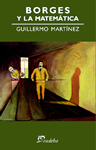 Borges
y las matemáticas de Guillermo
Martínez:
Borges
y las matemáticas de Guillermo
Martínez:
El cuento como sistema lógico. Un margen demasiado exiguo. Euclides o la estética
de la razón matemática. Soluciones y desiluciones. Un asunto de gemelos y primos.
La música del azar. Literatura y racionalidad. ¿Quién le teme al Uno feroz?
Un dios pequeño pequeño. El sumidero de Dios.
Editorial
EUDEBA, Buenos Aires (última edición 2003)
The signification of Pycho's story to understand the case of Borges
"I am out to give the public good, healthy, mental shake-ups..."
Alfred
Hitchcock.
What do you think of Psychoanalysis?
Borges: "Psychoanalysis is the ob-scene face of science fiction."
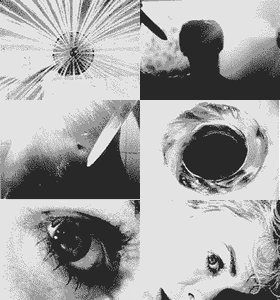

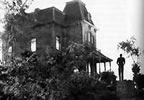
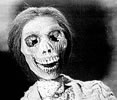
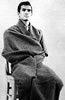 ..."Borges confessed many times that, as far as painting was concerned,
he had always been blind. He also seemed deaf to music. He said he admired Brahms
(one of his best stories is called Deutsches Requiem) but he rarely listened
to his music. He remembered the music that accompanied certain films, but less
for the music itself than for the way in which it assisted the story, as in
the case of Bernard Herrmann's score for Psycho, a film he very much admired
as “another version of the doppelgänger, in which the murderer becomes
his mother, the person he has murdered”. He found this notion mysteriously
appealing."
..."Borges confessed many times that, as far as painting was concerned,
he had always been blind. He also seemed deaf to music. He said he admired Brahms
(one of his best stories is called Deutsches Requiem) but he rarely listened
to his music. He remembered the music that accompanied certain films, but less
for the music itself than for the way in which it assisted the story, as in
the case of Bernard Herrmann's score for Psycho, a film he very much admired
as “another version of the doppelgänger, in which the murderer becomes
his mother, the person he has murdered”. He found this notion mysteriously
appealing."
A fragment from the recent book "With
Borges" by Alberto Manguel.
Related texts and interviews we invite you to read:
Click on the screen to watch and listen Hitchcock presenting Psycho
Script for
Psycho
Oedipal nightmare by the writer Alan
Vanneman
Welles
influence on Hitchcock's film, both published in Bright Lights Film Journal
On Hitchcock by
Camille Paglia
About
Hitchcock, women and The Birds listen Camille
Paglia interviewed in radio NPR
"The
savage Id" by Camille Paglia and Michael Sragow in the review Salon.com
"All
in the family" interview to Patricia Hitchcock O'Connell where she
recalls working with her father, Alfred, on "Strangers on a Train"
and "Psycho" in the review Salon.com
Algunos documentos audiovisuales sobre Borges:
Vea la entrevista en Television Española (1980)
de Joaquín
Soler Serrano a Jorge Luis Borges
Entrevista de Adolfo Bioy Casares
por José Tcherkaski
"Borges: videos, fotos y más cosas"
documental de Román Letjman
Hechos reveladores
más información en Habeas-Corpus.net
2009 y 2010
La herencia envenenada de Munar ...y de la mitómana Srta Kodama
Como la nacionalista y corrupta Munar no pudo controlar los Amigos de Borges para sus fines fascistas de mantenerse en el poder y continuar a delinquir con el bien público, hizo un pacto con su tocaya María Kodama para atacar la Fundación Internacional Can Mossenya - Amigos de J L Borges y lucrar con su predio histórico donde su grupo y el PP controlan el ayuntamiento. Para lograrlo sedujeron a la vicepresidenta de la Fundación, la Srta Pilar Montaner, de 90 años y la utilizaron como un caballo de Troya, para presentar en su nombre presentaron una querella maliciosa prestando al fundador de los Amigos de Borges de tener la misma intención que ellos: de enriquecerce -en el futuro- con la imposible venta del predio histórico protegido precisamente por la Fundación sin fines de lucro y de interés público con el protectorado del Ministerio de Cultura ... Ellos podrán enriquecerse si la corrupta justicia española condenara al presidente de la Fundación (Dr Meizoso) invocando la doctrina fascista de la junta Bush, Aznar y Blair de "ataque preventivo", a pesar que el Dr Meizoso ha sacrificado sus esfuerzos para proteger ese predio Cartujo... Las malhechoras Marías, Kodama y Munar, asociadas a otros poderes de facto de España utilizan para lograr su criminal objetivo un proceso penal antidemócratico heredado de la dictadura Franquista como explica en las dos entrevistas que publicamos en esta nota el propio Ministro de Justicia, Don Francisco Caamaño ...
Leer también el artículo "El poder judicial es heredero del franquismo"
..."Yo lo que quiero es vivir tranquila", confesó Maria Antònia Munar a los suyos tras el 27-M, envuelta en el último traje de Escada, con el último bolso de Louis Vouitton debajo del brazo y repleta de diamantes y perlas australianas. Y eso sólo se lo podía garantizar un partido. Aquel que tenía la Fiscalía bajo su control. Entregó todo y se refugió en el aparente remanso de paz del Parlamento balear como segunda autoridad de la comunidad autónoma, conformándose con migajas de poder en las instituciones, sacrificando a su propio partido Unió Mallorquina (UM) y entregando Baleares al PSOE.
Pero el sosiego duró poco. Hasta que EL MUNDO reveló que su cúpula había cobrado comisiones del 15% por recalificar el mejor polígono industrial de Palma. Con un interminable reguero de documentos, transferencias y facturas falsas. En total, 50 millones de euros. La perezosa Fiscalía miró para otro lado durante un año entero hasta que se vio obligada a hacer algo cuando la marea de pruebas se colaba ya en sus despachos en forma de hojas de periódico. Y decidió registrar, casi como un mero trámite, un flamante chalé recién construido en uno de los acantilados de la Bahía de Palma. En aquella vivienda, una funcionaria de la Seguridad Social, que había hecho de testaferro de los líderes de UM para camuflar el cobro del botín, se empeñaba, durante el otoño de 2008, en esconder debajo de su ordenador, un fajo de papeles. Los nervios le jugaron una mala pasada y despertó la curiosidad de los inspectores de Hacienda que husmeaban en los alrededores.
En aquellos documentos figuraba una productora audiovisual, Video-U. Y en ella, un pariente directo de Munar. Un ingeniero jubilado, sin ingresos oficiales ni patrimonio conocido, que se había encontrado, de golpe, con que el Consell de Mallorca que había gobernado su prima, le había dado cinco millones de euros públicos. Pero la Fiscalía, ni con esas. Se limitó a llamar a declarar al afortunado Víctor García, que había amanecido multimillonario. Le hizo cuatro preguntas de rigor, y él, abrumado por la nube de flashes y la insistencia de un juez que no daba crédito, se derrumbó. "Sí, soy un testaferro, y si usted quiere, yo las acciones se las regalo ahora mismo", le espetó al magistrado, que no pudo aguantar la risa.
Pero ni con esas Víctor García fue detenido ni el fiscal pidió para él medida cautelar alguna. Se marchó a su casa, como si nada, a disfrutar de su éxito empresarial, mientras el Ministerio Público garantizaba como podía la tranquilidad familiar. "¿Y ahora qué digo?", le preguntó a Munar. "Pues que eres el testaferro de Miquel Nadal -su delfín en el partido-". Y lo dijo, disparando el volumen de las carcajadas y provocando que Nadal destapara la caja de los truenos contra ella y provocara su dimisión. "Compramos la empresa con el dinero en efectivo que me dio Munar en el coche oficial", confesó contra su mentora. Pero ella cogió aire, presionó para acabar con el jefe de aquellos inspectores que habían metido la nariz donde no debían, que fue trasladado a Zaragoza en julio, y cuando se jactaba de que haber provocado la destitución de Raúl Burillo, y de que el Ministerio Público la trataría bien, el mismo juez que tuvo la oportunidad de quedarse la productora, heredar parte del imperio familiar y "vivir tranquilo", ha resultado ser honrado y ha dejado que sea un tribunal el que dirima la herencia.
 ...lea los artículos de Esteban Urreiztieta en El Mundo - más información en Diario de Mallorca - ABC - El País - Público.es
Y también El Fiscal pide 6 años de cárcel para María Antonia Munar enemiga de los Amigos de Borges
"El día de autos de Munar y Pantoja"
'Munar lleva al banquillo a toda la corrupta clase política mallorquina'
La Fiscalía ve prevaricación, malversación y falsedad en los pagos de Unión Mallorquina con dinero público para comprar votos entre los argentinos a través del presidente de la Casa Argentina de Baleares, Jorge Mandado (en la foto junto a la Srta Kodama a la que también invitaron a hacerse propaganda a cuestas del fallecido Borges con dinero público)
Lea también "Amnistía Internacional denuncia el retroceso de España en la lucha contra la impunidad"
2007
La señorita Kodama, autoproclamada "reina de los lobos" sobre la tumba de Borges, propietaria exclusiva de la explotación comercial de la millonaria obra, acusó a otro periodista de difamación: Esta vez acusa al prestigioso critico literario y periodista francés, Pierre Assouline, editor de "La république des livres" para Le Monde. El Tribunal Correccional de París revisará el 6 de diciembre de 2007 la presentación realizada por la putativa viuda de Borges contra Pierre Assaouline. El periodista había dicho que Kodama gestionaba "a su manera" la obra del escritor. ...Bajo el título "Ya no pueden ustedes leerlo... El escándalo Borges", el artículo de Assouline aseguraba que la viuda gestionaba "a su manera" la obra del escritor y ponía en duda además la "validez" del matrimonio (obtenido de un cónsul criminal del neo nazi dictador Stroessner) por poderes entre Borges y esta mujer 40 años menor. ... más en diario Perfil - y en la web Le Monde
La putativa viuda de Borges, señorita Kodama, acusó al compañero de toda la vida de Borges, Adolfo Bioy Casares, de "egoísmo atroz" por anotar en su diario, recientemente publicado, que Borges le tenía miedo a Kodama. Borges reconoció en muchas oportunidades que era un "cobarde", que desde su infancia su hermana Norah era quien le mandaba y que le hacia hacer cosas que le daban miedo, miedo y sometimiento aprendido en la escuela de su onmipotente Madre que controló todos los detalles de su único hijo hasta su muerte en 1975 ...La señorita Kodama, demostrando como los fundamentalistas una vez más que cree poseer la absoluta verdad sobre Borges, en una entrevista concedida al diario chileno, La Tercera, sentenció tajante que "Ninguno de los libros sobre Borges tiene valor". ...más en diario Perfil
Se propaga la ignorancia sobre la obra y la vida de Borges:
los prejuicios se propagan a tal extremo que algunos interesados le atribuyen
textos y poemas mediocres, y se compran como fetiches, otros por interés o fobias
le atribuyen un deseo sexual imposible por mujeres como hacen con Gardel, ese
otro ídolo de los argentinos que, como hacía Procusto, tienen la manía de adaptar a la medida fantasmal del "macho"
todos sus ídolos varones, probablemente como denegación del masoquiso que la mayoría de argentinos demuestran en la arena política
donde siempre dan su voto al candidato que les roban, siempre más que el anterior caudillo de turno.
Pero la ignorancia se extiende también
por las universidades del mundo, donde los jóvenes no necesitan aprender a leer ni a pensar para descolgar un título técnico a la moda, solo necesitan repetir el vocabulario que complacerá al examinador
de turno como observó Karl Popper; así en la Universidad californiana de Berkeley tomaron a la actriz
Graciela Borges por hija del poeta vírgen cuyo Eros no concibió jamás... lea el reportaje
de Magdalena Ruiz Guiñazu en diario Perfil
2006
+ UBEDA, Epifanía "Fanny" , q.e.p.d., falleció el 10-June-2006
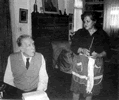 En
la foto: Fanny con Borges a comienzos del 80, publicada en el libro "El
señor Borges"
En
la foto: Fanny con Borges a comienzos del 80, publicada en el libro "El
señor Borges"
de Epifanía Uveda de Robledo y Alejandro Vaccaro.
Obituaria: 10 junio 2006 A veinte años de la muerte de Jorge
Luis Borges fallece en Buenos Aires Epifanía Uveda de Robledo,
cariñosamente llamada "Fanny" (como la querida abuela paterna
Fanny Haslam de Borges) quien compartió, durante cuatro décadas,
la
vida de la pareja formada por Doña Leonor Acevedo viuda de Borges y su
hijo Georgie, cuidando de ambos cada día y cada noche.
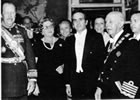 Foto
reproducida del libro de investigación "Borges
la posesión póstuma" de Juan Gasparini, recientemente
publicado en francés con el título "La
dépouille de Borges" = Entre los dictadores Stroessner y Franco
el cónsul paraguayo, un argentino mafioso de nombre Gramont Berres (purga
prisión en Suiza) a quien la señorita Kodama compró su
falso matrimonio con Borges cuando él se moría en Ginebra de un cáncer terminal.
Foto
reproducida del libro de investigación "Borges
la posesión póstuma" de Juan Gasparini, recientemente
publicado en francés con el título "La
dépouille de Borges" = Entre los dictadores Stroessner y Franco
el cónsul paraguayo, un argentino mafioso de nombre Gramont Berres (purga
prisión en Suiza) a quien la señorita Kodama compró su
falso matrimonio con Borges cuando él se moría en Ginebra de un cáncer terminal.
Cuando Borges se moría de cáncer, aislado en Ginebra, la
señorita María Kodama (quién volvería a la Argentina
enriquecida con la herencia comercial de su obra), puso en la calle a Fanny,
pero no contenta con ese acto de crueldad hacia una asistenta en edad de merecer
jubilación, la nueva señorita heredera absoluta de la millonaria
obra Borges comenzó contra la anciana criada una costosa y odiosa persecución
por medio de sus
muchos abogados. La señorita Kodama le debe además a Fanny
el haber tenido la fortuna de acompañar a Borges en sus viajes por el
mundo, desde la muerte de su Madre en 1975, porque fue Fanny que la propuso
cuando otras personas no pudieron acompañar a Borges debido a su situación
familiar, edad o compromisos profesionales. "La judicialización
es una técnica elaborada que tiene como fin callar a quienes opinan en
disidencia mediante el temor" dice con acierto, por una vez, Vaccaro el
coleccionista y biográfo de Georgie. Manifiesta la señorita K
otra de sus muchas diferencias con Borges cuando elige para servir sus planes
siniestros personajes que Borges repudiaba explicitamente: peronistas, nacionalistas
y/o mafiosos como
áquel cónsul paraguayo, ahora en prisión, que le vendió,
durante la dictadura de Stroessner, su falso certificado de matrimonio con Borges,
cuando éste, acostumbrado por su Madre y por su hermana Norah a ser dócil
y sumiso - hasta el masoquismo - con el sexo fuerte (como él mismo reconocía),
estaba a pocas horas de su muerte, debilitado por la terrible enfermedad. Además
cuenta la señorita Kodama con el apoyo personal del sonriente señorito
Zapatero, quien por méritos propios pasará a la Historia Universal
de la Infamia como promotor del leyes anticonstitucionales en favor de su idolatrado
sexo fuerte (de ahí que se lo llame por el apellido de su madre Zapatero
y no de su padre Rodríguez) o del social-nazionalismo en España
o por haber resucitado milagrosamente la banda terrorista de ETA, cuando se
encontraba derrotada. Desde entonces, es decir desde el año 2004, la
señorita Kodama, siguiendo el estilo manipulador de "Emma Zunz",
ha venido a espiar la sede de nuestra fundación en Valldemossa y ha tejido
una nueva intriga contra los Amigos de Borges, amparándose en el "inocente"
nepotismo de su admirador Zapatero, esta vez con el último alcalde de
la dictadura franquista que aún conserva el poder en esa retrógrada
localidad de Mallorca. Como se puede apreciar, no
por nada se autoproclamó la señorita Kodama, sobre la tumba de
Borges, la "reina de los lobos", ya que la
verdadera Ulrica del cuento se llamaba von Külhmann.
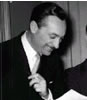 El célebre
periodista argentino don Antonio Carrizo (ver foto) recuerda la importancia
de Fani en la vida cotidiana de Borges en un sobrio epitafio publicado en diario
La Nación esta semana:
El célebre
periodista argentino don Antonio Carrizo (ver foto) recuerda la importancia
de Fani en la vida cotidiana de Borges en un sobrio epitafio publicado en diario
La Nación esta semana:
"+ UBEDA, Epifanía , q.e.p.d.,
falleció el 10-6-2006. - Mientras la literatura armaba sus juegos en
la calle Maipú, ella tenía la casa en orden. Gracias Fani. Antonio
Carrizo." Epitafio que los Amigos de Borges suscribimos.

EVENTS & NEWS
GET INVOLVE NOW:
DONATE because a beautiful deed is a joy for ever!
SPONSOR a programme, a work, this website or an event and enjoy the benefices of standing by a noble cause.
VOLUNTEER and get support for your projects and career.
ASSOCIATE take part, advance your education and others' while enjoying creative friendship.
Members Forum e-Shop Newsletter Contact usFIND in ENGLISH
Time in London -
OTHER WEB-SITES
HouseofAsterion.org CavalierArgos.org BetinaEdelberg.net Habeas-Corpus.net Psychology-on.net HostalCanMario.net
Copyright of
The Friends of Jorge Luis Borges Worldwide Society,
unless otherwise stated.